
Follow Us :
Common Tree Pruning Mistakes Homeowners Should Avoid
Follow Us :
Tree pruning may look simple, yet one wrong cut can harm a tree for years. Homeowners often remove too many branches, cut in the wrong place, or use unsafe tools. These tree pruning mistakes can leave weak limbs, open wounds, and poor growth. Some errors may even raise the risk of falling branches.
Castle’s Tree Service helps property owners make safer choices through professional inspections and careful pruning. Our team provides tree pruning services in Tyler TX, for young and mature trees. We study each tree before making any cuts. This helps us protect its shape, strength, and health.
With more than 16 years of experience, our team understands local trees and the conditions in East Texas. Proper care can reduce risk while keeping useful branches in place. This blog explains which pruning errors homeowners should avoid and when trained help is the safer choice.
Every pruning cut changes how a tree grows. Therefore, a branch should not be removed without a clear purpose. A homeowner may cut a healthy limb because it blocks light or looks uneven. However, that limb may support the tree’s shape or make food through its leaves. Poor cuts may harm a tree and shorten its life. Proper pruning may remove deadwood, improve structure, or lower a known risk.
Before cutting, homeowners should ask:
This simple review can prevent many common tree pruning mistakes. When the reason remains unclear, a tree inspection can provide a safer plan.
Leaves help a tree make the food it needs. Therefore, improper tree pruning can place the tree under added stress. Removing many live branches at once may reduce shade and expose bark to strong sun. It can weaken growth as well. A thin canopy may look neat for a short time. However, the tree may respond by growing many fast shoots. These shoots often have weak points where they join larger limbs. As a result, future pruning may become harder.
The benefits of tree pruning come from careful branch choice, not heavy cutting. Good work keeps enough healthy leaves while removing branches with a clear problem. Castle’s Tree Service uses crown cleaning, crown thinning, crown raising, and structural pruning when each method is appropriate for the tree. Our professional tree pruning services focus on a safer structure while preserving the tree’s natural form. This balanced approach supports tree health and pruning goals without stripping away useful growth.
Topping means cutting large branches back to stubs. Some homeowners use this method when a tree grows taller than expected. However, topping does not provide safe or lasting height control. The International Society of Arboriculture calls it one of the most harmful pruning practices.
Topping removes many leaves at once. Therefore, the tree loses part of its food-making system. Large open cuts may expose inner wood to decay. The tree may respond with quick new shoots near each cut. Yet these shoots can have weak attachments.
Homeowners who want to avoid damaging trees should not shorten a mature tree through random cuts. A trained arborist can study its size, form, and nearby targets. Selective cuts may improve clearance without ruining the canopy. In some cases, pruning may not solve the concern. A full review can show whether support, continued care, or removal offers a safer choice.
A correct pruning cut protects the tree’s natural defense area. However, tree trimming mistakes often include leaving long stubs or cutting a branch flat against the trunk. Both errors can slow the tree’s response. A stub may die back and become an entry point for decay. In contrast, a flush cut can remove the branch collar. This raised area sits where a branch joins the trunk. It contains tissue that helps the tree close around the wound.
| Cut type | What it may cause | Better approach |
| Long stub | Dead wood and slow closure | Cut near the branch collar |
| Flush cut | Damage to trunk tissue | Keep the branch collar intact |
| Ragged cut | Torn bark and a larger wound | Use sharp tools and a clean cut |
| One heavy cut | Bark tearing below the limb | Use controlled cuts for large branches |
Learning how to prune trees correctly starts with cut placement. We recommend cutting just outside the branch collar.
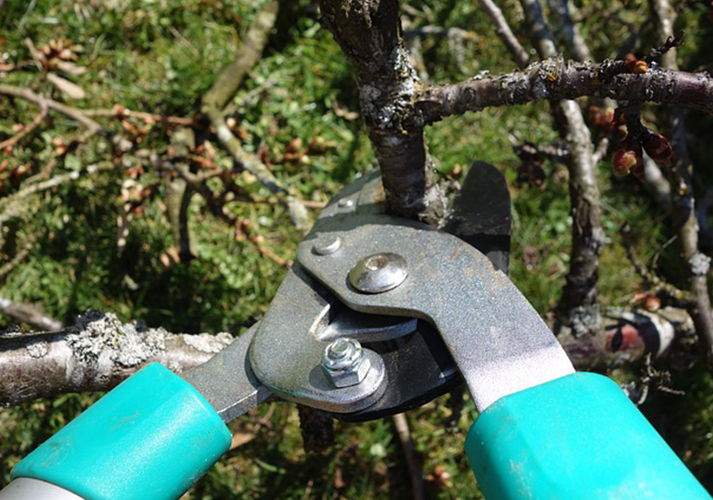
A dull blade can crush wood and tear bark. Therefore, pruning tools should match the branch size and remain sharp. Small hand pruners suit thin twigs. Larger branches may require a pruning saw or other professional equipment. Dirty tools may carry plant material between cuts. Moreover, damaged handles or loose parts can slip during use. Homeowners should inspect each tool before starting.
Useful tree pruning tips include:
These steps support safe tree pruning methods for small, reachable branches. However, they do not make high or heavy work safe. Professional tree trimming may involve climbing gear, rigging systems, bucket trucks, or controlled branch lowering. Those tasks require training and site planning.
There is no single pruning date for every tree. The right time depends on the tree, its health, and the reason for the cut. Dead, damaged, weak, or diseased limbs may need attention whenever they create concern. However, the planned removal of live growth may require better timing. Many light cuts can occur during the year. Yet removing live tissue is often best during mid-to-late winter. Heavy pruning after spring growth may place extra stress on weak trees.
These factors can help decide when to prune trees:
Local weather matters as well. Through residential tree pruning, Castle’s Tree Service studies the tree and property before recommending a schedule. Tree cabling and bracing services in Tyler TX can add support, though no support system can prevent every failure.
Young trees may have small branches, yet early structure matters. Proper care can guide one strong main stem and well-spaced limbs. Therefore, early pruning may reduce larger problems as the tree grows. Homeowners sometimes remove too much from a young tree to achieve quick shaping. Others leave rubbing limbs or several stems that compete for the same space. Both choices may lead to a weak form.
Good tree maintenance services should consider future size, branch spacing, and nearby structures. Arborist pruning services can help create a long-term plan instead of forcing a young tree into a fixed shape. Careful early choices may reduce large cuts when the tree becomes mature.
Large branches can shift, swing, split, or fall without warning. Therefore, homeowners should not rely on a ladder and a hand saw for risky overhead work. Branch weight may pull a person off balance. A falling section may strike a roof, fence, vehicle, or person.
Extra danger is present when a tree has:
OSHA identifies falls, falling branches, cutting injuries, and energized power lines as serious tree care hazards. It advises treating power lines as energized. Our tree specialists in Tyler Texas, use controlled methods based on tree condition and access. Our work may involve rigging, bucket trucks, directional cuts, or cranes. Severe damage may require emergency tree removal after storms rather than routine pruning.
Pruning can reduce some risks, but it cannot fix every tree problem. A weak branch union may need support. Root damage may need a health review. Severe decay may require removal. Therefore, the right service starts with a full inspection.
A trained arborist may check the trunk, canopy, roots, soil, branch unions, and nearby property. Based on that review, the plan may include pruning, monitoring, treatment, cabling, bracing, or removal. We offer tree pruning services in Tyler TX, with proper guidance so the client knows what they get. Our owner, Michael Castle, is an ISA Certified Arborist (TX-4815-A) with Tree Risk Assessment Qualification. Our services include tree health inspections, risk reviews, structural pruning, and written arborist reports.
Good pruning protects healthy growth while addressing a real concern. Therefore, homeowners should avoid random cuts, heavy canopy removal, topping, and unsafe ladder work. Each tree needs a plan based on its size, condition, and location.
We bring more than 16 years of tree care experience to local properties. Our process starts with a site visit and tree review. We discuss the customer’s goals, explain the available options, and select a suitable approach. Our crew protects nearby property during the job and cleans the work area afterward. Homeowners seeking tree pruning services in Tyler TX, can request help before a small concern becomes harder to manage. Local homeowners can find Castle’s Tree Service at 16148 County Road 1134, Tyler, TX 75709.
Careful pruning may improve structure, remove deadwood, increase clearance, and reduce some branch risks. Most importantly, it keeps healthy branches when they still serve the tree. That thoughtful approach helps protect both the tree and the surrounding property.
1. What are common tree pruning mistakes homeowners make?
Common errors include topping, removing too many live branches, leaving stubs, and cutting into the branch collar. Homeowners may use dull tools or prune without a clear goal in mind. They may also attempt high branches. Each error can weaken structure, tear bark, or create unsafe growth.
2. How does professional tree pruning improve tree health?
Professional pruning removes selected dead, weak, rubbing, or poorly placed branches. This may improve structure, airflow, and clearance. A trained arborist keeps healthy growth whenever possible. Because each cut affects future growth, careful branch choice helps the tree maintain a useful canopy and natural form.
3. Can pruning too much damage a tree?
Yes. Heavy pruning removes leaves that make food for the tree. It may expose bark to strong sun and cause stress. The tree may grow many weak shoots near large cuts. Therefore, pruning should remove only branches that serve a clear health, structure, or safety goal.
4. What happens if trees are not pruned regularly?
A tree may develop deadwood, rubbing limbs, low clearance, or crowded growth. However, not every tree needs work on a fixed schedule. Its age, species, health, and location affect its needs. Regular inspections can find concerns early and help guide the right level of care.
5. Should homeowners prune large tree branches themselves?
Homeowners should avoid large, high, storm-damaged, or heavy branches. These limbs can move without warning and may cause serious injury or property damage. Work near power lines brings greater danger. Trained crews can use rigging, lifts, bucket trucks, or cranes when required.
6. What signs show a tree needs pruning?
Warning signs include dead branches, cracked limbs, rubbing growth, low clearance, and heavy branches over a structure. Hanging limbs or storm damage need a quick review. A crowded canopy may also need selective work. An arborist can decide whether pruning, support, treatment, or removal is appropriate for the problem.